The Story
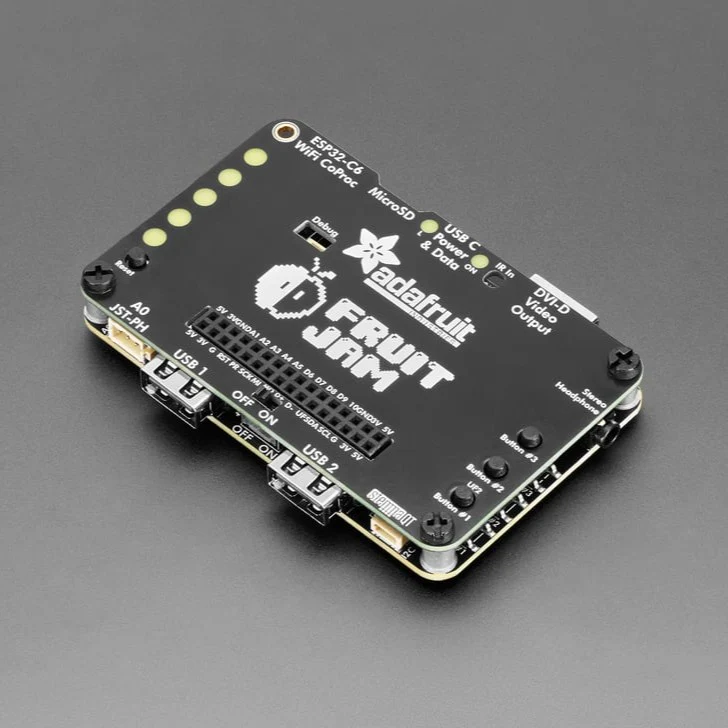
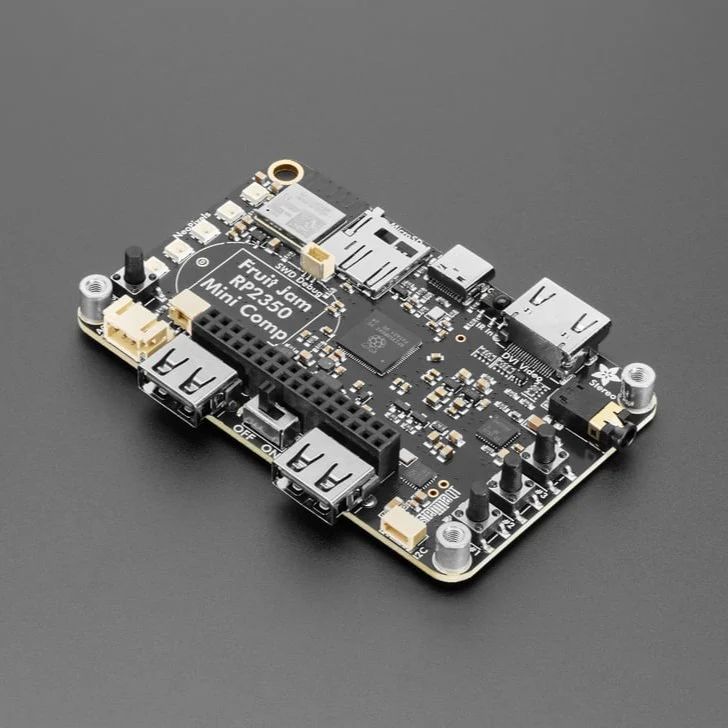
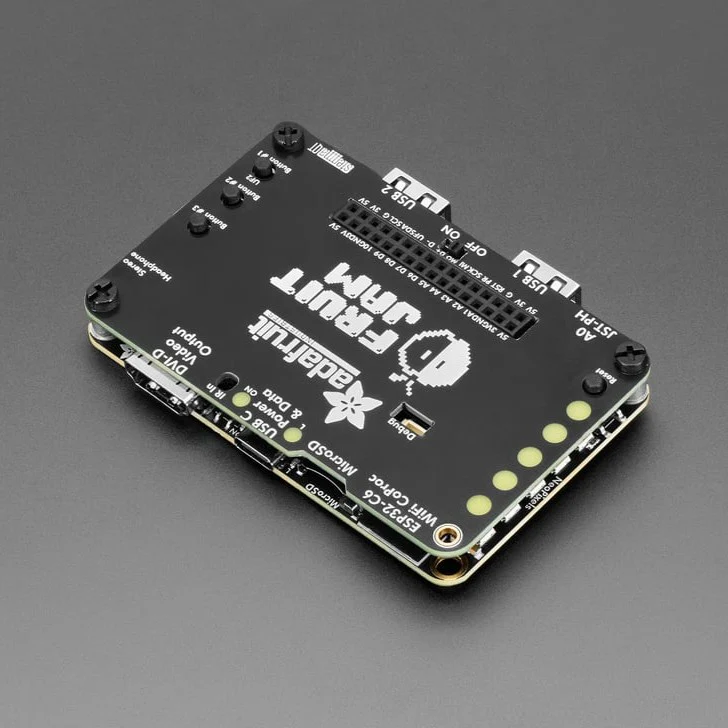
A credit card sized mini computer with DVI output and jam packed with fun hardware.
We were catching up on a recent hackaday hackchat with eben upton and learned some fun facts: such as the DVI hack for the RP2040 was inspired by a device called the IchigoJam. we remember reading about this back when it was an LPC1114, now it uses an RP2040. well, we're wrapping up the Metro RP2350 and lately we've been joking around that with DVI output and USB Host support via bit-banged PIO, you could sorta build a little stand-alone computer.
Well, one pear-green-tea-fueled-
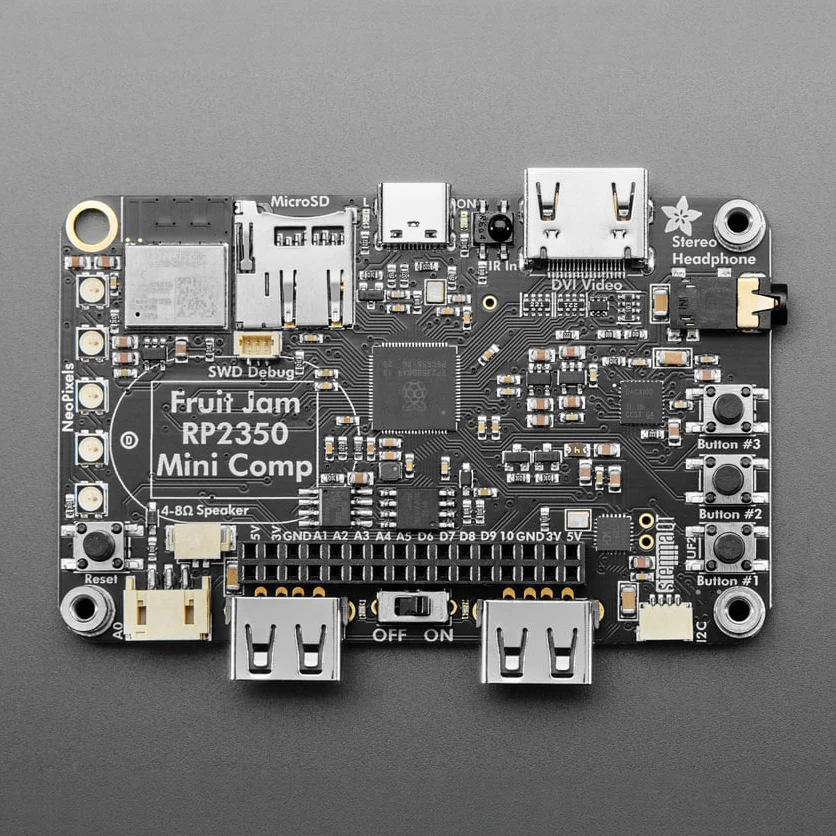
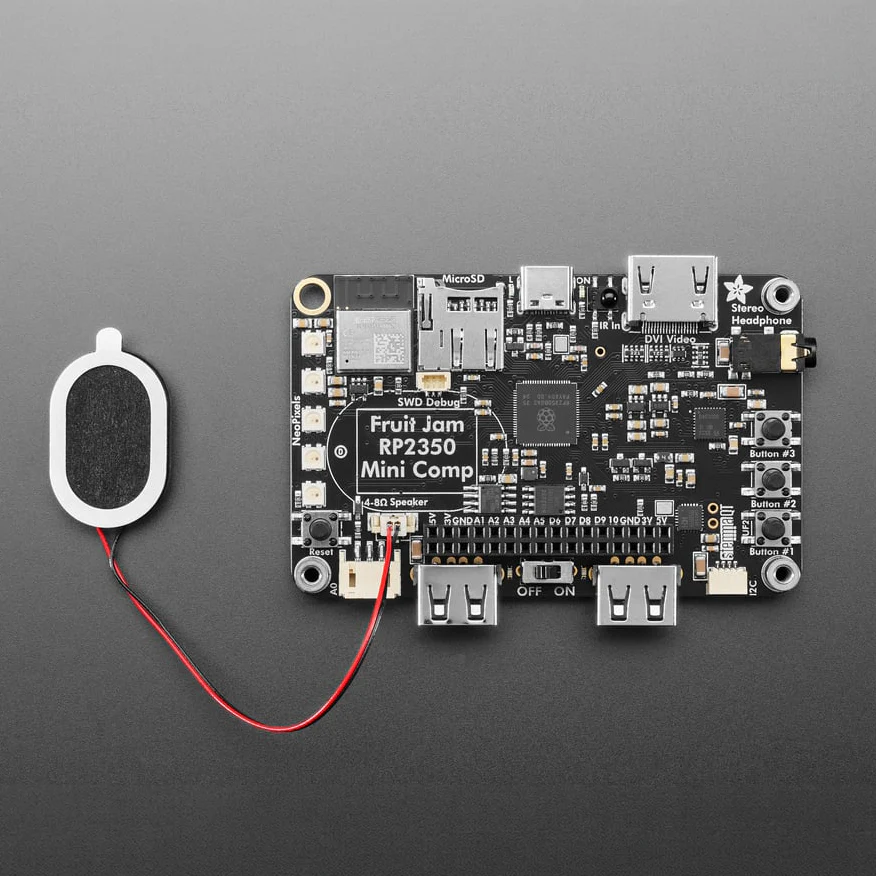
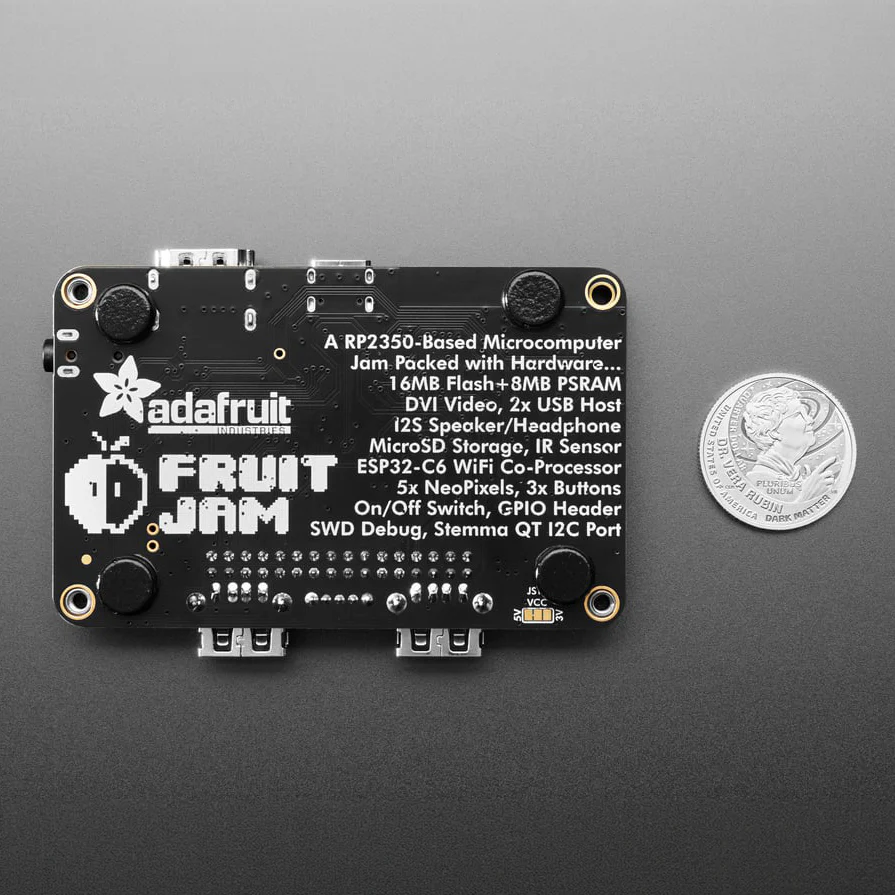
With the extra pins of the QFN-80 RP2350B, we're able to jam a ridonkulous amount of hardware into this shape:
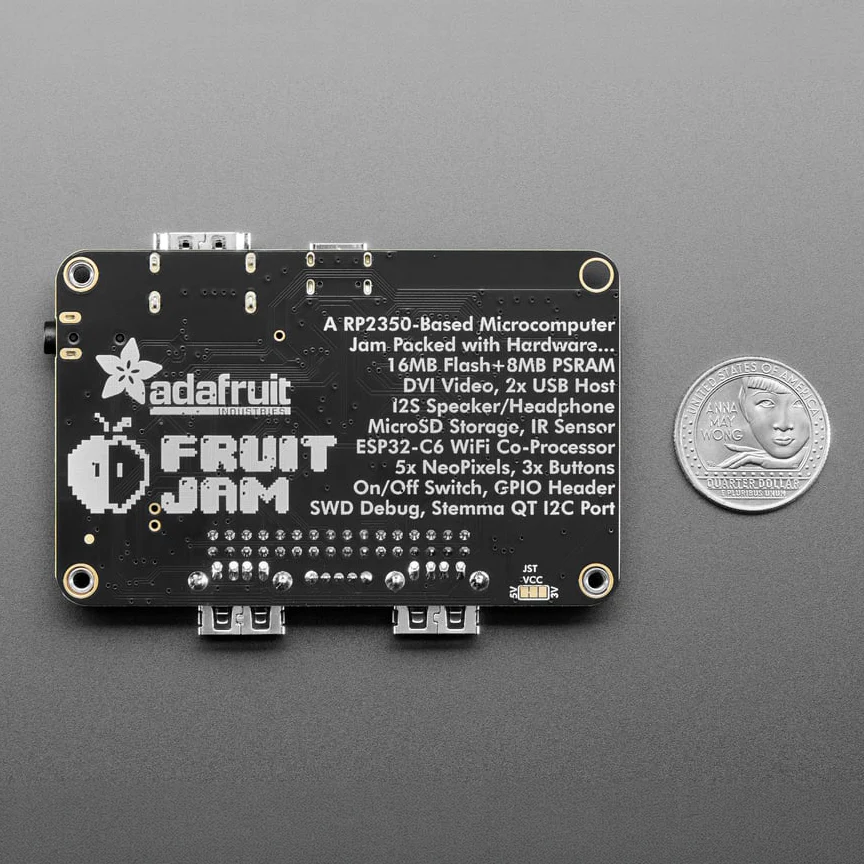
- RP2350B dual 150MHz Cortex M33 microcontroller
- PicoProbe debug port
- 16 MB Flash + 8 MB PSRAM - the PSRAM will help when we want do do things like run emulations that we need to store in fast RAM access, and also let us use the main SRAM as the DVI video buffer.
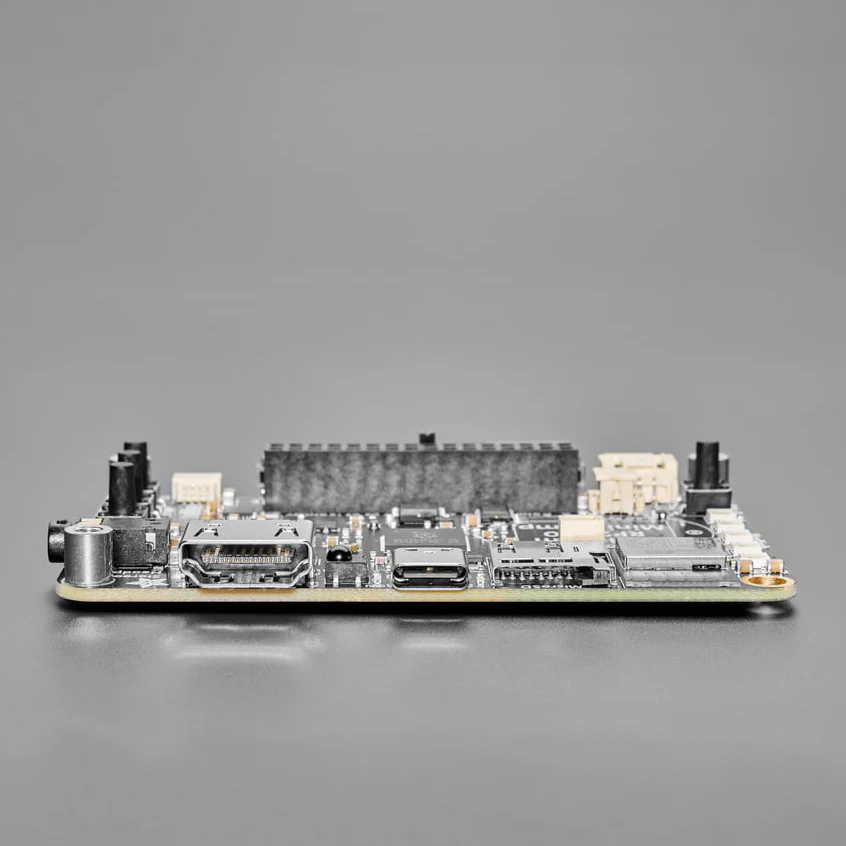
- USB type C for bootloading/USB client
- Micro SD card with SPI or SDIO
- DVI output on the HSTX port
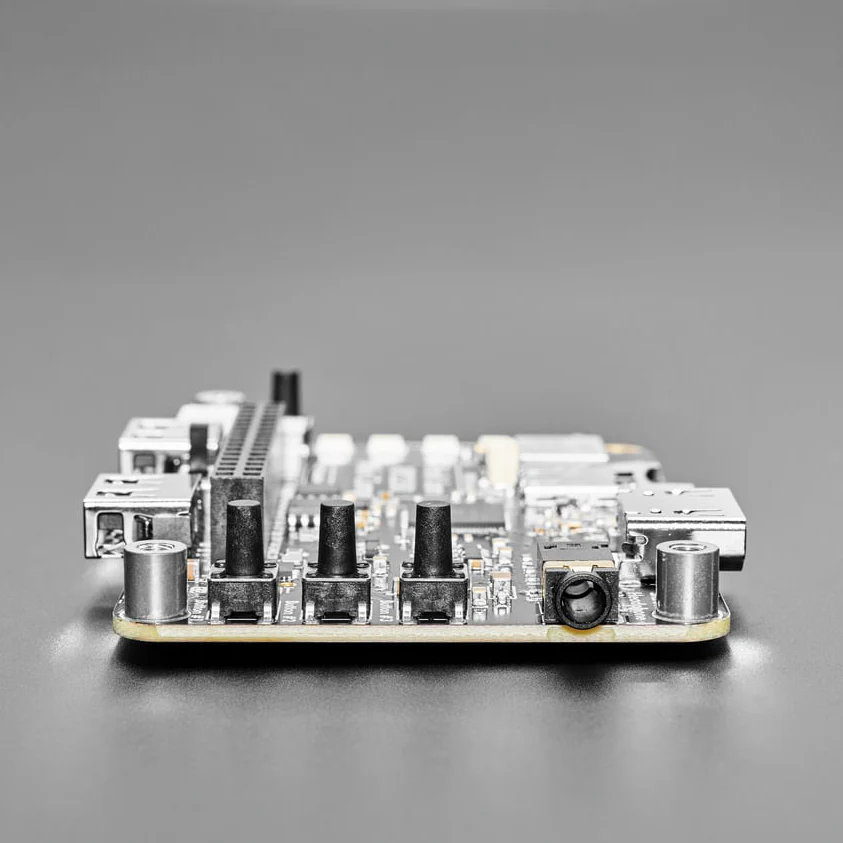
- I2S stereo headphone + mono speaker via the TLV320DAC3100
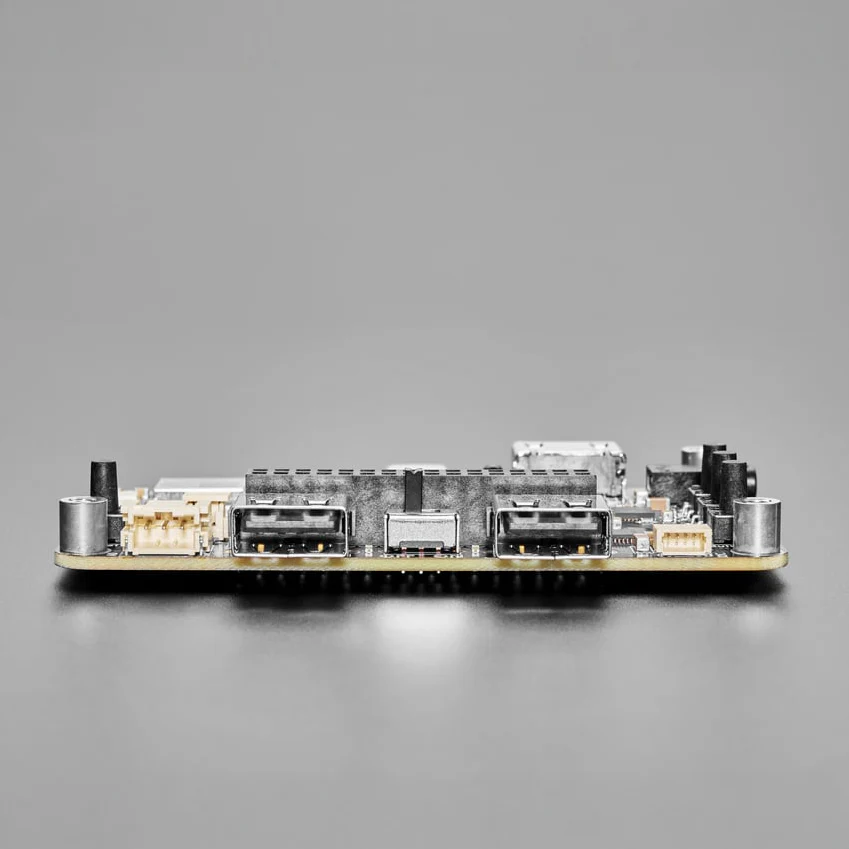
- 2-port USB type A hub for both keyboard and mouse or game controllers
- ESP32-C6 for WiFi / Internet connectivity
- Chunky on-off switch
- Stemma QT I2C
- Stemma classic JST 3-pin
- 5x NeoPixels
- 3x tactile switches
- 16-pin socket header with 10 A/D GPIO + 5V/3V/GND power pins.
It's like a mini computer, reminiscent of retro computing of the 70's and 80's: plug in a monitor and keyboard + mouse to make toy programs and applications in CircuitPython, Arduino or even Pico SDK!
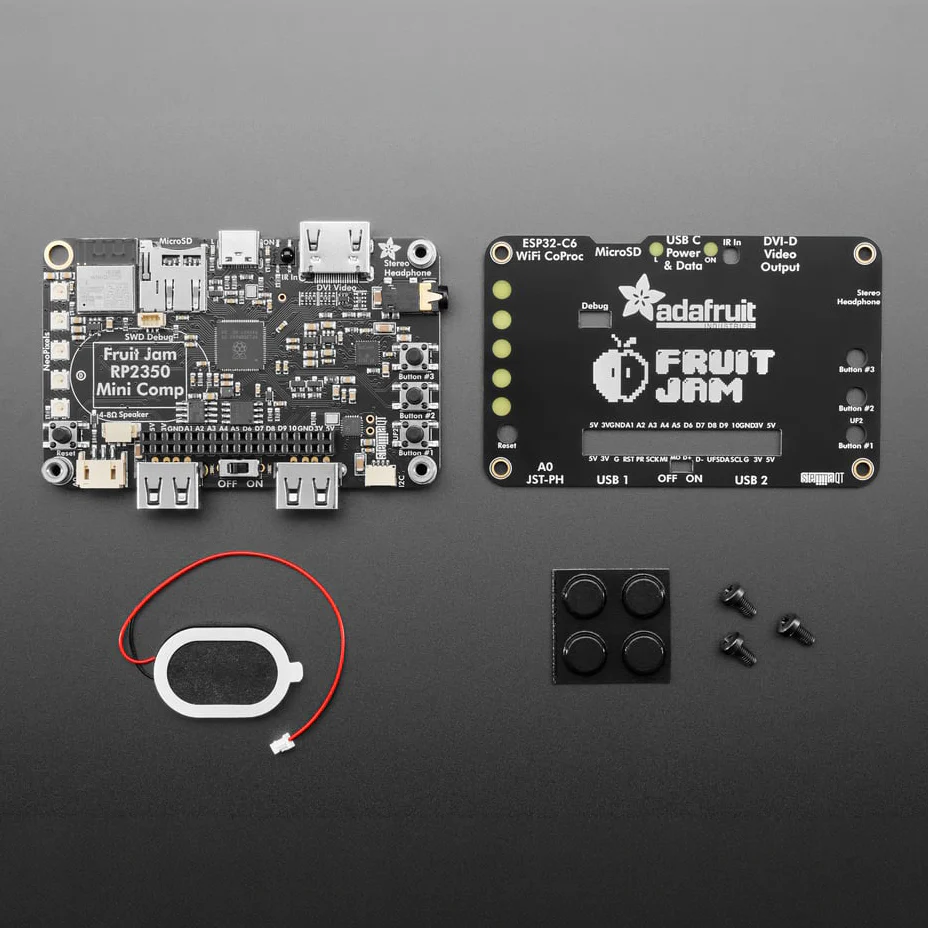
This mini-kit comes with:
- Assembled and tested Fruit Jam PCB assembly
- Top plate to protect your board
- 3 x nylon screws to attach the top plate (we don't have a metal standoff next to the ESP32-C6 antenna)
- Mini speaker
- Bumper kit
Technical Details
Revision History:
- As of Oct 8th, 2025 – The PCB has been updated with a new A4 Chip.


Learn
- Primary Guide: Adafruit Fruit Jam A mini credit card sized computer!
- View All Guides
Details & Craftsmanship
Every detail has been carefully considered to bring you the perfect product.
Details & Craftsmanship
Every detail has been carefully considered to bring you the perfect product.
Details & Craftsmanship
Every detail has been carefully considered to bring you the perfect product.
Details & Craftsmanship
Every detail has been carefully considered to bring you the perfect product.
Details & Craftsmanship
Every detail has been carefully considered to bring you the perfect product.
Details & Craftsmanship
Every detail has been carefully considered to bring you the perfect product.
Details & Craftsmanship
Every detail has been carefully considered to bring you the perfect product.
Details & Craftsmanship
Every detail has been carefully considered to bring you the perfect product.
Details & Craftsmanship
Every detail has been carefully considered to bring you the perfect product.
Details & Craftsmanship
Every detail has been carefully considered to bring you the perfect product.
Details & Craftsmanship
Every detail has been carefully considered to bring you the perfect product.
Description
A credit card sized mini computer with DVI output and jam packed with fun hardware.
We were catching up on a recent hackaday hackchat with eben upton and learned some fun facts: such as the DVI hack for the RP2040 was inspired by a device called the IchigoJam. we remember reading about this back when it was an LPC1114, now it uses an RP2040. well, we're wrapping up the Metro RP2350 and lately we've been joking around that with DVI output and USB Host support via bit-banged PIO, you could sorta build a little stand-alone computer.
Well, one pear-green-tea-fueled-
With the extra pins of the QFN-80 RP2350B, we're able to jam a ridonkulous amount of hardware into this shape:
- RP2350B dual 150MHz Cortex M33 microcontroller
- PicoProbe debug port
- 16 MB Flash + 8 MB PSRAM - the PSRAM will help when we want do do things like run emulations that we need to store in fast RAM access, and also let us use the main SRAM as the DVI video buffer.
- USB type C for bootloading/USB client
- Micro SD card with SPI or SDIO
- DVI output on the HSTX port
- I2S stereo headphone + mono speaker via the TLV320DAC3100
- 2-port USB type A hub for both keyboard and mouse or game controllers
- ESP32-C6 for WiFi / Internet connectivity
- Chunky on-off switch
- Stemma QT I2C
- Stemma classic JST 3-pin
- 5x NeoPixels
- 3x tactile switches
- 16-pin socket header with 10 A/D GPIO + 5V/3V/GND power pins.
It's like a mini computer, reminiscent of retro computing of the 70's and 80's: plug in a monitor and keyboard + mouse to make toy programs and applications in CircuitPython, Arduino or even Pico SDK!
This mini-kit comes with:
- Assembled and tested Fruit Jam PCB assembly
- Top plate to protect your board
- 3 x nylon screws to attach the top plate (we don't have a metal standoff next to the ESP32-C6 antenna)
- Mini speaker
- Bumper kit
Technical Details
Revision History:
- As of Oct 8th, 2025 – The PCB has been updated with a new A4 Chip.
Learn
- Primary Guide: Adafruit Fruit Jam A mini credit card sized computer!
- View All Guides