Original: $3.34
-70%$3.34
$1.00The Story
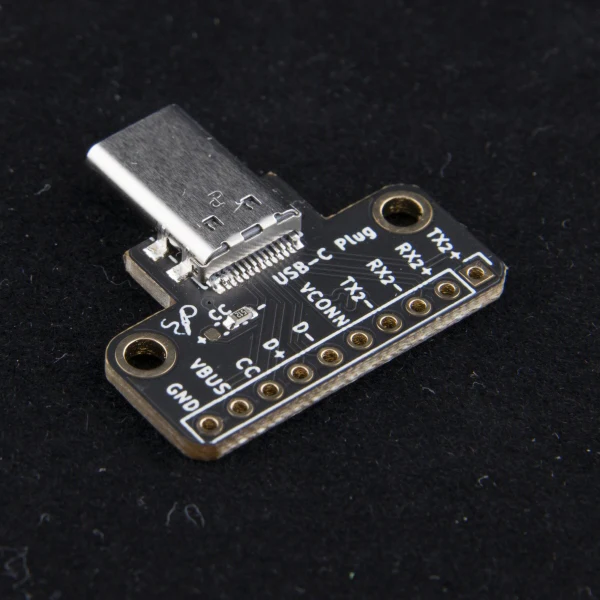
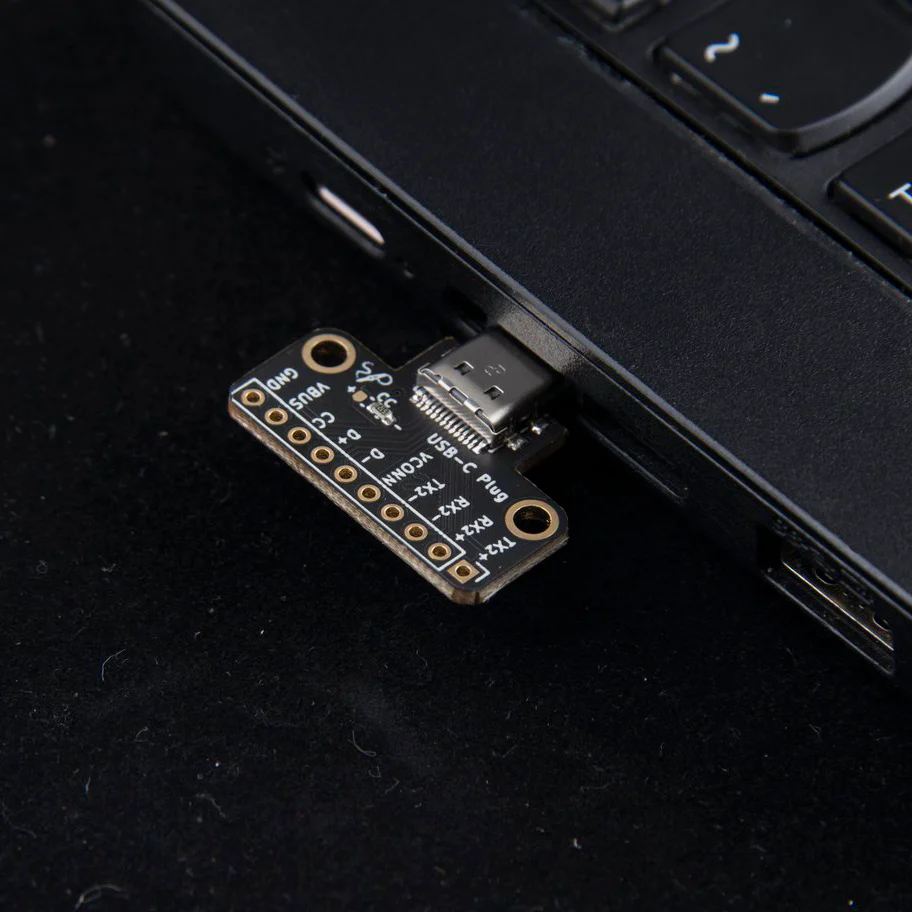
This plug and breakout board provides an easy way to extract signals and power when plugged into a USB Type-C Receptacle.
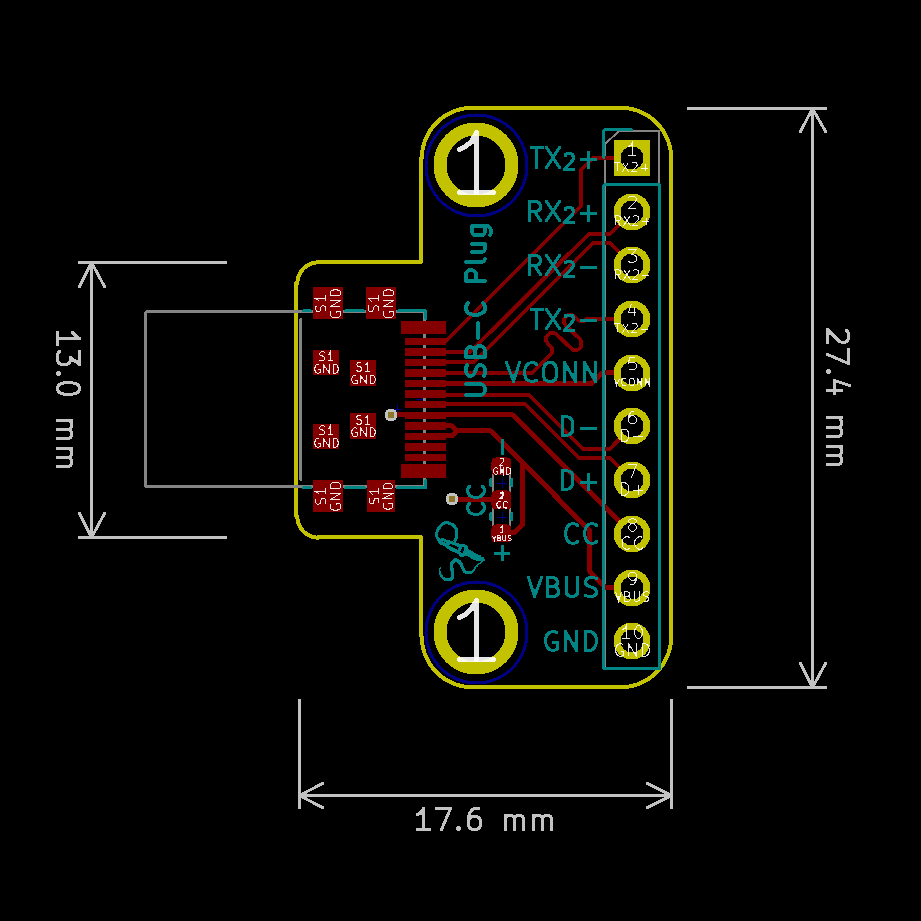
By default, the CC pin is connected via a 5.1K resistor to GND (-), meaning the plug identifies as a downstream port, and the upstream port will provide up to 1.5A at 5V. You can replace or move the resistor to pull the CC pin to VBUS (+) or change the pull value.
The 3.0 variant of the breakout board contains only two SuperSpeed differential pairs (RX2+/- and TX2+/-), meaning only single-lane mode is available.
As per the USB Type-C specification, the plug has only one pair of D+/D- pins; it’s up to the Receptacle it's plugged into to connect them together or use a mux for more advanced scenarios. Similar with CC and VCONN pins. The SBU pins are not available.
For more details about USB Type-C, check out this application note or the USB Type-C Specification.
Downloads
Datasheets
CAD Files
Hardware Files
- You can find KiCad hardware source files for the boards on Github.
Licence Information
The USB Type-C Plug Breakout hardware designs are licensed under the CERN Open Hardware Licence.
This documentation is licensed under the Creative Commons Attribution-ShareAlike License.
Details & Craftsmanship
Every detail has been carefully considered to bring you the perfect product.
Details & Craftsmanship
Every detail has been carefully considered to bring you the perfect product.
Description
This plug and breakout board provides an easy way to extract signals and power when plugged into a USB Type-C Receptacle.
By default, the CC pin is connected via a 5.1K resistor to GND (-), meaning the plug identifies as a downstream port, and the upstream port will provide up to 1.5A at 5V. You can replace or move the resistor to pull the CC pin to VBUS (+) or change the pull value.
The 3.0 variant of the breakout board contains only two SuperSpeed differential pairs (RX2+/- and TX2+/-), meaning only single-lane mode is available.
As per the USB Type-C specification, the plug has only one pair of D+/D- pins; it’s up to the Receptacle it's plugged into to connect them together or use a mux for more advanced scenarios. Similar with CC and VCONN pins. The SBU pins are not available.
For more details about USB Type-C, check out this application note or the USB Type-C Specification.
Downloads
Datasheets
CAD Files
Hardware Files
- You can find KiCad hardware source files for the boards on Github.
Licence Information
The USB Type-C Plug Breakout hardware designs are licensed under the CERN Open Hardware Licence.
This documentation is licensed under the Creative Commons Attribution-ShareAlike License.